Skip to header Skip to main navigation Skip to main content Skip to footer

Search form

Home
Angel Fire New Mexico

Main navigation

  • Home

Ranching History

Breadcrumb

  • Home
  • Ranching History

From Grouse Gulch to Grazing Land: Patrick Lyons and the Moreno Valley Herds
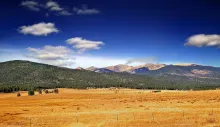
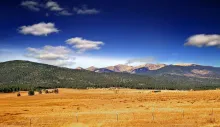
Golden ranch pasture in the Moreno Valley with fences and barns, looking toward Wheeler Peak, the grazing country where Patrick Lyons ran cattle.

Did you know that one of the Moreno Valley's first cattlemen reached New Mexico by crossing an ocean to avoid a war, and then promptly enlisted in another army? Patrick Lyons was born in February 1831 at Kilriney, in County Kildare, Ireland, and was educated in the national schools of his native land. In 1854 he was drafted into the English army for the war between England and Russia. To avoid that service he came to America instead, landing in New York, where, strange to say, he immediately enlisted in the First Regiment of Mounted Rifles.
  • Read more about From Grouse Gulch to Grazing Land: Patrick Lyons and the Moreno Valley Herds

Clay Allison of Cimarron: The Rancher Who Called Himself a Shootist

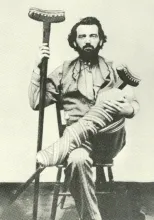
Historic black-and-white photograph of Clay Allison seated on crutches with his bandaged foot propped up in the 1870s

Drive west from Angel Fire through Cimarron Canyon and you come to Cimarron, the old Santa Fe Trail town at the edge of the Moreno Valley. In the 1870s it was the center of Colfax County ranching and, for a time, home to one of the West's most talked-about cattlemen, Robert Clay Allison. He built a real ranch here, but it is his temper and his gun that people still remember.

  • Read more about Clay Allison of Cimarron: The Rancher Who Called Himself a Shootist

97,424 Acres or 1,714,765? The Patent Fight Over the Maxwell Grant

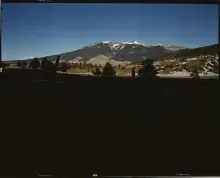
The Moreno Valley in Colfax County in spring 1943, looking across ranch meadows toward a snow-capped peak — land once held inside the Maxwell Land Grant.

Stand anywhere in the Moreno Valley, look from Baldy Mountain down across the ranches and meadows toward Angel Fire, and you are looking across land that was once claimed as a single private estate. The Maxwell Land Grant was the largest land grant in United States history, and for decades nobody could say for certain how large it really was. Was it about 97,424 acres, or was it 1,714,765 acres? That question took a patent, a lawsuit, and the United States Supreme Court to answer.

  • Read more about 97,424 Acres or 1,714,765? The Patent Fight Over the Maxwell Grant

A Tow Rope at the Sunday Dinner Table: Angel Fire's Founding Idea

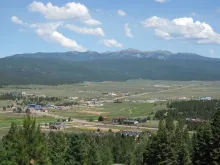
Angel Fire village in the Moreno Valley, photographed from the mountain in 2009.

Every resort has a founding meeting. Angel Fire's was a Sunday dinner, and the minutes were never written down — but the LeBus family remembered exactly how it went.

The family had run cattle in the Moreno Valley since buying the Cieneguilla Ranch in 1954, and they liked to ski. The trouble was getting to it: the nearest skiing meant a drive out of the valley. George LeBus raised the obvious fix at the dinner table — why not put up a tow rope on the ranch, so the family would not have to drive so far to ski?

  • Read more about A Tow Rope at the Sunday Dinner Table: Angel Fire's Founding Idea

Mary Gallagher's Stand: The Widow Who Fought the Eagle Nest Dam

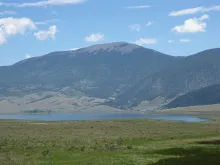
Eagle Nest Lake filling the Moreno Valley floor beneath Baldy Mountain, over the farm Mary Gallagher fought to keep.

Every acre of Eagle Nest Lake was once somebody's farm, and no one fought harder to keep hers than Mary Gallagher. Her nine-year stand against the dam is one of the Moreno Valley's great stories of grit.

Mary was a widow farming valley land her husband John had bought with gold earned in the 1870s Elizabethtown boom. The Gallaghers had built a working farm from almost nothing, digging irrigation canals from Willow Creek and Cieneguilla Creek to water their fields. It was good land, hard won, and Mary intended to keep it.

  • Read more about Mary Gallagher's Stand: The Widow Who Fought the Eagle Nest Dam

Walking the Mountain: How Angel Fire Resort Began

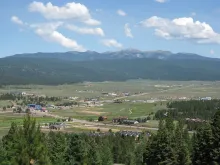
Angel Fire village spread across the Moreno Valley floor, the high country of the Sangre de Cristo Mountains behind it.

Angel Fire Resort was not designed on a drafting table. It was walked into existence, one trail at a time, by a rancher and his general manager climbing the mountain above the family ranch.

  • Read more about Walking the Mountain: How Angel Fire Resort Began

Cieneguilla Ranch: The LeBus Brothers and the Valley's Ranching Roots

Stand anywhere in Angel Fire today and you are standing on ranch land. Before the ski runs, the golf course, and the condominiums, the Moreno Valley was a working landscape of cattle, timber, and hay meadows, and few purchases shaped its future more than the one Roy and George LeBus made in 1954.

  • Read more about Cieneguilla Ranch: The LeBus Brothers and the Valley's Ranching Roots

John W. Turner: The Teacher Who Became a Moreno Valley Rancher

Moreno Valley ranch pasture looking toward Wheeler Peak in northern New Mexico

Did you know that one of the Moreno Valley's most forward-looking ranchers started out as a schoolteacher? John W. Turner arrived in the valley above Elizabethtown in 1874, moving to this high mountain country for the benefit of his wife's health. Elizabethtown was still a gold town then, and Turner tried the two trades the valley offered a newcomer: he taught school for one winter, then spent four years mining.

  • Read more about John W. Turner: The Teacher Who Became a Moreno Valley Rancher
Subscribe to Ranching History

Copyright © 2026 Rocky Mountain Madman LLC - All rights reserved

Developed and Designed by Rocky Mountain Madman LLC