
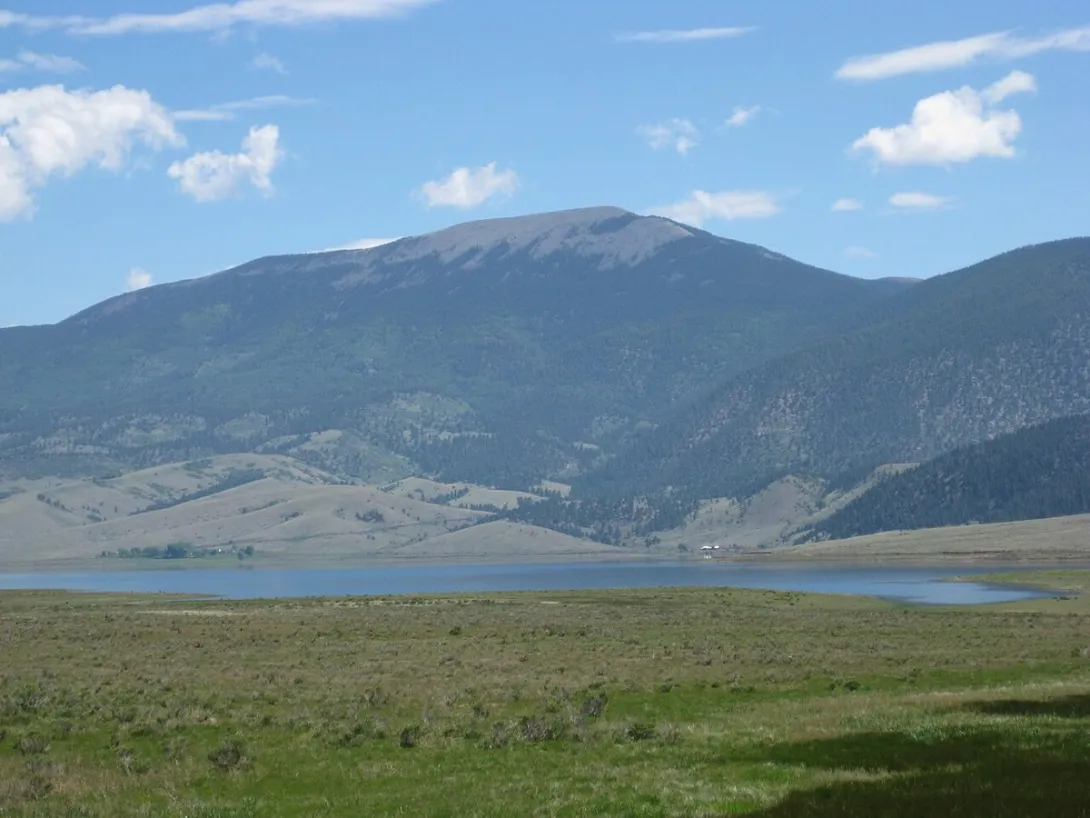
Every acre of Eagle Nest Lake was once somebody's farm, and no one fought harder to keep hers than Mary Gallagher. Her nine-year stand against the dam is one of the Moreno Valley's great stories of grit.
Mary was a widow farming valley land her husband John had bought with gold earned in the 1870s Elizabethtown boom. The Gallaghers had built a working farm from almost nothing, digging irrigation canals from Willow Creek and Cieneguilla Creek to water their fields. It was good land, hard won, and Mary intended to keep it.
In January 1908, she learned that the Cimarron Valley Land Company meant to dam the Cimarron River and flood the valley floor for a reservoir. Mary did what few farm widows of her era would have dared: she filed a formal protest against the dam permit with the territorial engineer, arguing her water rights and her livelihood in her own words. The company answered with lawyers.
In April 1909 the company filed a condemnation suit to take her land by force of law. Mary held out anyway. The proceedings dragged on year after year — through hearings, filings, and delays — while surveyors marked the future shoreline around the farm she refused to leave. She was still holding out when she died in 1916, never having signed away her ground.
Only then did the fight end. On January 17, 1917, the deeds were finally handed over after the company paid her eight children for the land, and construction of Eagle Nest Dam began that spring. The rising water covered the valley floor Mary Gallagher had farmed and defended — the canals, the fields, the home place.
Today the lake she fought is the valley's beloved centerpiece, famous for fishing and mountain views. Few boaters drifting over that water know a widow once held off a corporation for nine years to keep it dry. The lake is beautiful; the story underneath it is better.