Did you know that one of the Moreno Valley's most forward-looking ranchers started out as a schoolteacher? John W. Turner arrived in the valley above Elizabethtown in 1874, moving to this high mountain country for the benefit of his wife's health. Elizabethtown was still a gold town then, and Turner tried the two trades the valley offered a newcomer: he taught school for one winter, then spent four years mining.
Click to see more photos of the Moreno Valley — Eagle Nest Lake, Elizabethtown, and the valley today
Turner was not a typical fortune hunter. Born in Sangamon County, Illinois, and reared to farming, he had supplemented his schooling with four years of study in the literary course at the University of Michigan, and he had taught in Missouri and Kansas before coming west. When his four mining years were done, a 1907 history of New Mexico records, he was recognizing the possibilities of the country for cattle raising — and he turned his attention to ranching instead.
It was a serious commitment. Turner purchased his land from the Maxwell Land Grant Company immediately after the confirmation of the grant — the United States Supreme Court upheld the company's title in 1887 — securing 2,500 acres in the valley. Three hundred of those acres were under irrigation and, in the history's words, produced splendid crops, while large herds of cattle ranged on the rest. In a valley where the gold boom had faded, Turner was betting on grass, water, and patience.
He also brought the valley's farm work into a new age. Turner introduced the first mowing machine into the Moreno Valley, and the first thresher and binder as well — machines that mattered enormously in a high valley with a short growing season, where getting hay cut and bound quickly meant winter feed for the herds. The same history calls him a leader in the progressive movements that developed agriculture in this part of the country, and he raised a family of eight children on the ranch.
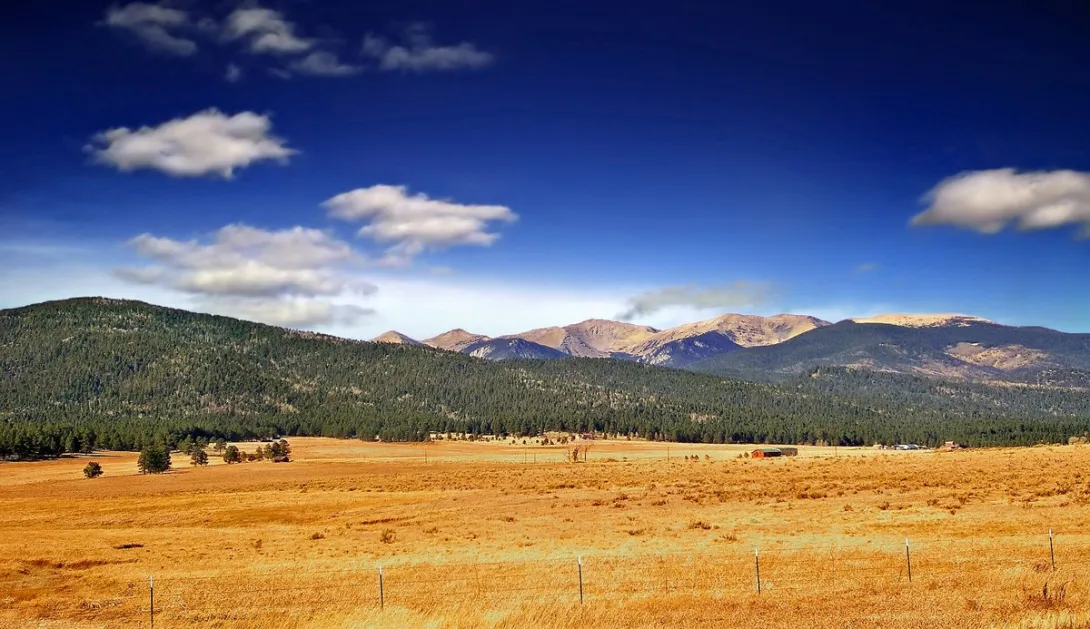
Turner's story is how much of the Moreno Valley was really settled: not by gold alone, but by families who stayed after the boom, irrigated the bottomland, cut hay, and ran cattle under Baldy Mountain and Wheeler Peak. Ranching went on to dominate the valley's life until the 1960s, when the first ski runs were cut above Angel Fire, and large working ranches still operate in the valley today. The next time you drive the Enchanted Circle past those golden pastures, remember the teacher who came for the mountain air and stayed to ranch.