
Drive west from Angel Fire through Cimarron Canyon and you come to Cimarron, the old Santa Fe Trail town at the edge of the Moreno Valley. In the 1870s it was the center of Colfax County ranching and, for a time, home to one of the West's most talked-about cattlemen, Robert Clay Allison. He built a real ranch here, but it is his temper and his gun that people still remember.
Click to see more photos of Clay Allison — his portrait and his Pecos grave markers
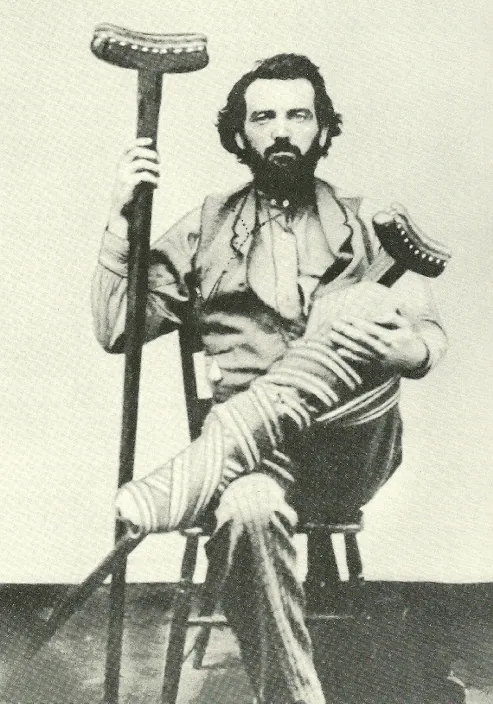
Allison was born September 2, 1841, on a farm in Wayne County, Tennessee, the fourth of nine children of Jeremiah Scotland and Mariah R. Brown Allison. After serving in the Confederate Army, he moved to the Brazos River country of Texas and signed on as a cowhand with Oliver Loving and Charles Goodnight. Historians believe he may have been among the eighteen herders on the 1866 drive that blazed the Goodnight-Loving Trail. By the spring of 1871 he was in Colfax County, where he accidentally shot himself in the foot while he and some companions stampeded a herd of army mules as a prank. A surviving photograph from that period shows him seated, his bandaged foot propped up and crutches in hand.
In 1872 his future brother-in-law L. G. Coleman and ranching partner I. W. Lacy moved to a spread in Colfax County. Allison drove their herd to the new ranch and was paid 300 cattle for the work. With that start he built his own ranch near Cimarron into what the Texas State Historical Association calls a lucrative operation. Ranching was his living, even as saloon brawls and shooting sprees built his other reputation.
That reputation hardened during the Colfax County War, the violent fight over the Maxwell Land Grant that unsettled settlers across the Moreno Valley and Cimarron country. On October 30, 1875, Allison may have been in the mob that seized and lynched Cruz Vega, who was suspected of murdering a Methodist circuit rider. Two days later he killed gunman Pancho Griego, a friend of Vega, in a confrontation at the St. James Hotel in Cimarron, a building that still stands in the town's historic district. In January 1876 a drunken Allison wrecked the office of the Cimarron News and Press over a scathing editorial, then allegedly returned later and paid 200 dollars for the damages.
In 1878 Allison sold his New Mexico ranch to his brother John for 700 dollars and moved to Hemphill County, Texas. He married Dora McCullough at Mobeetie on February 15, 1881, and in 1883 bought a ranch northwest of Pecos. On July 3, 1887, while hauling supplies to that ranch from Pecos, he was thrown from his heavily loaded wagon and fatally injured when a rear wheel ran over him. He was buried in Pecos Cemetery the next day, and in 1975 his remains were reinterred in Pecos Park. Cimarron kept the stories anyway, a reminder that the quiet ranch country you cross on the way to Angel Fire was once anything but quiet.