Skip to header Skip to main navigation Skip to main content Skip to footer

Search form

Home
Angel Fire New Mexico

Main navigation

  • Home

Moreno Valley

Breadcrumb

  • Home
  • Moreno Valley

The Huey That Came Home: Viking Surprise at Angel Fire
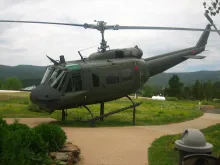
A Huey helicopter on display at the Vietnam Veterans Memorial at Angel Fire, New Mexico.

When the Vietnam Veterans Peace and Brotherhood Chapel was dedicated above the Moreno Valley in 1971, it stood nearly alone on its hill — a soaring white chapel built by Dr. Victor and Jeanne Westphall to honor their son David and the Marines lost with him. Did you know that chapel was only the beginning? Over the next half century the memorial grew, piece by piece, into one of the most complete places of healing for Vietnam veterans anywhere in the country, and one of its most beloved additions arrived by way of a battlefield in the Mekong Delta.
  • Read more about The Huey That Came Home: Viking Surprise at Angel Fire

Angel Fire Takes the Controls: Village Finalizes Airport Transfer

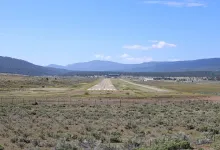
Runway 17/35 at Angel Fire Airport in the Moreno Valley, one of the highest airports in the country.

Wednesday, October 28, 2026

One of the highest airports in the country is changing hands. Angel Fire Airport, sitting at 8,379.5 feet in the Moreno Valley just north of the village, with a single 8,900-foot asphalt runway, has long been owned by Colfax County. This month, county and village leaders took the formal steps to move it into the Village of Angel Fire's hands, a transfer village officials have been preparing as they plan the airport's next chapter.

  • Read more about Angel Fire Takes the Controls: Village Finalizes Airport Transfer

Lincoln's Chef in Cimarron: Henri Lambert and the St. James Hotel

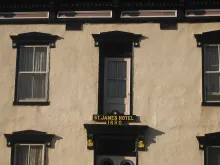
The St. James Hotel in Cimarron, the former Lambert Inn built by Henri Lambert in 1872, with its sign over the sidewalk.

The most famous hotel in the Cimarron country was built by a French chef who had cooked for Abraham Lincoln. Henri Lambert's road from the White House kitchen to the Santa Fe Trail runs straight through the Moreno Valley.

Lambert was born in France on October 28, 1838, and learned his trade in the port city of Le Havre. Emigrating to America, his skill carried him to an extraordinary post: chef to President Abraham Lincoln. His service ended in sorrow — Lambert was relieved of his duties on April 14, 1865, the very day Lincoln was assassinated.

  • Read more about Lincoln's Chef in Cimarron: Henri Lambert and the St. James Hotel

A Tow Rope at the Sunday Dinner Table: Angel Fire's Founding Idea

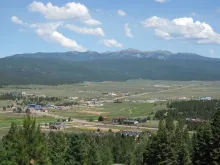
Angel Fire village in the Moreno Valley, photographed from the mountain in 2009.

Every resort has a founding meeting. Angel Fire's was a Sunday dinner, and the minutes were never written down — but the LeBus family remembered exactly how it went.

The family had run cattle in the Moreno Valley since buying the Cieneguilla Ranch in 1954, and they liked to ski. The trouble was getting to it: the nearest skiing meant a drive out of the valley. George LeBus raised the obvious fix at the dinner table — why not put up a tow rope on the ranch, so the family would not have to drive so far to ski?

  • Read more about A Tow Rope at the Sunday Dinner Table: Angel Fire's Founding Idea

The Night Elizabethtown Burned the Land Company's Office

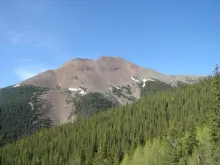
Baldy Mountain, 12,441 feet, rising over the old Maxwell Land Grant country above Elizabethtown.

On the night of October 27, 1870, a crowd of miners in Elizabethtown burned the Maxwell Land Grant Company's office to the ground. It was the opening shot of the Colfax County War, and it happened just up the Moreno Valley from today's Angel Fire.

  • Read more about The Night Elizabethtown Burned the Land Company's Office

The Aztec Mine: Where the Moreno Valley Gold Rush Went Underground

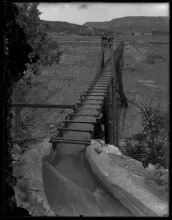
A flume carrying water toward the Elizabethtown gold workings, photographed in the 1910s (Palace of the Governors Photo Archives).

The Moreno Valley gold rush began in creek gravel, but its fortune was buried in the mountain. The story of the Aztec Mine is how a placer camp on Willow Creek became one of New Mexico's great hard-rock mines.

  • Read more about The Aztec Mine: Where the Moreno Valley Gold Rush Went Underground

The Wall, Closer to Home: Angel Fire's Half-Scale Replica

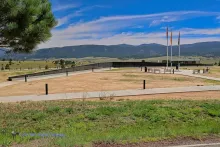
The half-scale Vietnam Veterans Memorial Wall replica at Angel Fire, its black granite panels overlooking the Moreno Valley.

The most famous memorial in America now has a counterpart in the Moreno Valley. Just north of the Peace and Brotherhood Chapel at Angel Fire stands a half-scale replica of the Vietnam Veterans Memorial Wall — 250 feet of black granite carrying 58,318 names.

  • Read more about The Wall, Closer to Home: Angel Fire's Half-Scale Replica

Before the Ranches: The Moreno Valley's First Peoples

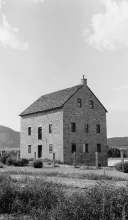
The stone Aztec Mill in Cimarron, photographed by the Library of Congress, where provisions for the Cimarron agency were ground and stored.

Before the land grants, before the gold camps and the cattle ranches, the Moreno Valley belonged to the Moache Ute and the Jicarilla Apache. Their era here lasted centuries, and its ending set the stage for everything that followed.

  • Read more about Before the Ranches: The Moreno Valley's First Peoples

Forty Years a Village: How Angel Fire Incorporated in 1986

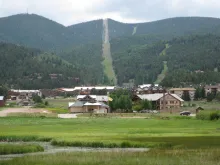
The village of Angel Fire spread across the Moreno Valley with the ski runs on the mountain behind it.

Angel Fire is a young town with an old landscape. The Moreno Valley around it has been hunted, farmed, mined, and ranched for centuries, but the Village of Angel Fire itself only came into legal existence forty years ago, on July 1, 1986.

  • Read more about Forty Years a Village: How Angel Fire Incorporated in 1986

Mary Gallagher's Stand: The Widow Who Fought the Eagle Nest Dam

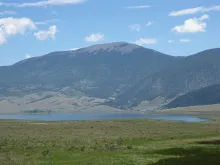
Eagle Nest Lake filling the Moreno Valley floor beneath Baldy Mountain, over the farm Mary Gallagher fought to keep.

Every acre of Eagle Nest Lake was once somebody's farm, and no one fought harder to keep hers than Mary Gallagher. Her nine-year stand against the dam is one of the Moreno Valley's great stories of grit.

Mary was a widow farming valley land her husband John had bought with gold earned in the 1870s Elizabethtown boom. The Gallaghers had built a working farm from almost nothing, digging irrigation canals from Willow Creek and Cieneguilla Creek to water their fields. It was good land, hard won, and Mary intended to keep it.

  • Read more about Mary Gallagher's Stand: The Widow Who Fought the Eagle Nest Dam

Pagination

  • Previous page ‹‹
  • Page 3
  • Next page ››
Subscribe to Moreno Valley

Copyright © 2026 Rocky Mountain Madman LLC - All rights reserved

Developed and Designed by Rocky Mountain Madman LLC