
The Moreno Valley gold rush began in creek gravel, but its fortune was buried in the mountain. The story of the Aztec Mine is how a placer camp on Willow Creek became one of New Mexico's great hard-rock mines.
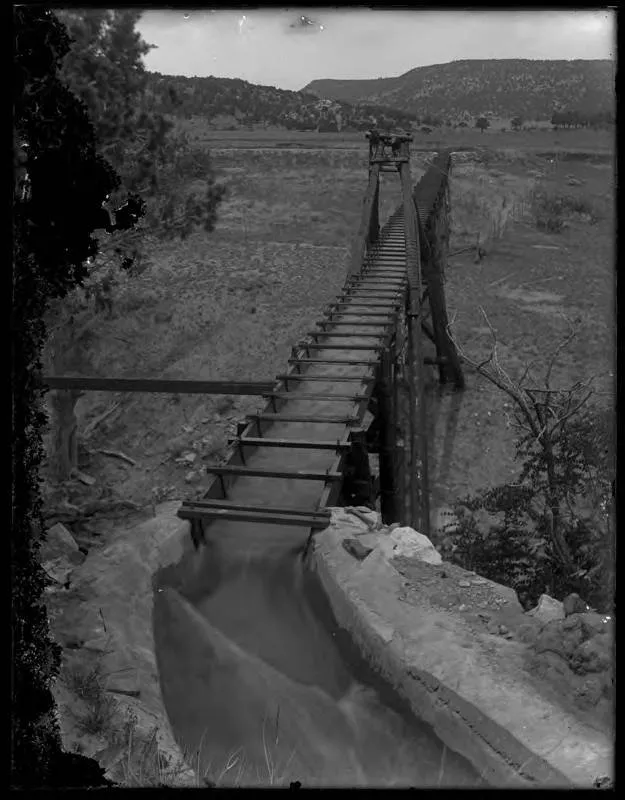
When prospectors found gold in Willow Creek in October 1866, washing it out of the gravel was the easy part. The creek placers yielded handsomely — about 2,250,000 dollars by an early count — but water for washing was scarce and costly in the high valley, and everyone knew the loose gold in the creek had washed down from somewhere. The real prize was the lode: the vein of solid rock up the slopes of Baldy Mountain where the gold originated.
In June 1868, miners traced the float gold uphill and struck the outcrop. The claim became the Aztec Mine. This was no longer a one-man operation with a pan and a rocker; hard-rock mining took capital, timber, machinery, and men. A 15-stamp mill — a battery of iron stamps that crushed ore day and night so the gold could be extracted — was hauled in and started up on October 29, 1868.
The Aztec rewarded its builders. In strong weeks the mine yielded as much as 21,000 dollars in gold, and across its first four years it produced roughly 1,000,000 dollars. Together with the placers, it made the Elizabethtown district, for a brief shining period, one of the richest in the territory — the engine behind the first incorporated town in New Mexico.
Like all bonanzas, it faded. The rich ore thinned, costs climbed, and the valley's miners moved on to newer strikes. But the Aztec's lesson endured in the Moreno Valley: the gold in the creek was only ever a signpost, pointing uphill to the mountain that still stands over the valley today.