
Before the land grants, before the gold camps and the cattle ranches, the Moreno Valley belonged to the Moache Ute and the Jicarilla Apache. Their era here lasted centuries, and its ending set the stage for everything that followed.
The high valley, ringed by the Sangre de Cristo Mountains, was rich country: elk and deer in the meadows, fish in the creeks, and passes leading east to the buffalo plains and west to the Rio Grande. Ute and Jicarilla families lived and hunted through the valley and along the eastern slopes long before Spanish settlers pushed into northern New Mexico in the 1700s. Spanish, then Mexican, then American settlement pressed in around them, but the valley itself remained Native country well into the 1800s.
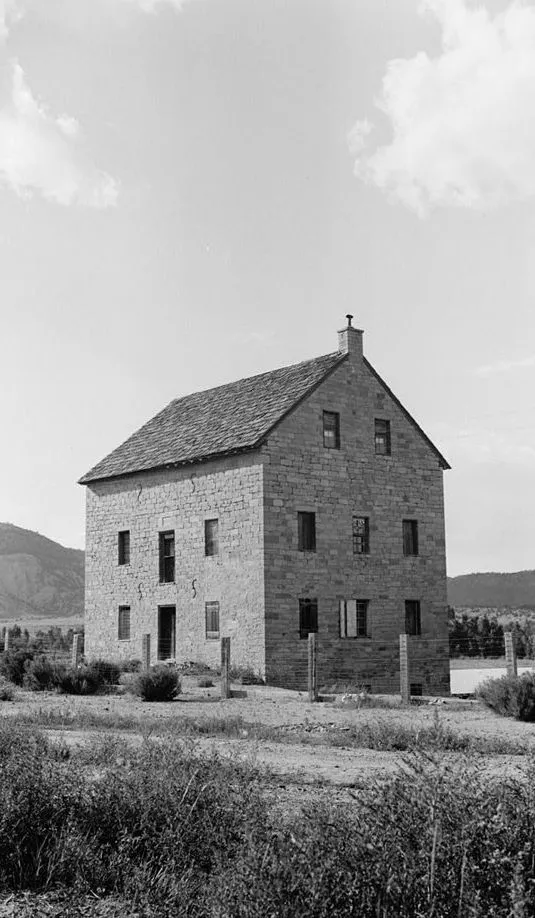
In 1861, the United States created the Cimarron Indian Reservation — an agency for the Ute and Jicarilla — on land belonging to Lucien Maxwell's enormous grant. The agency issued daily provisions to the families camped there, with supplies ground and stored at Maxwell's Aztec Mill in Cimarron, the great stone mill whose ruins still stand. For fifteen years, the agency was the valley's center of gravity: hundreds of Native people drew rations, traded, and tried to hold onto a homeland that was being surveyed and sold around them.
The end came in 1876. The government dissolved the arrangement and removed the valley's first peoples: the Moache Utes were relocated to southwestern Colorado, and the Jicarilla Apaches to a reservation in north-central New Mexico. Only after their removal did the old grant lands of the Moreno Valley pass fully into the homesteads and ranches of southwest Colfax County.
Every later chapter of valley history — the ranches, the gold boom, the resort — began on land emptied by that removal. It is the first story of the Moreno Valley, and the one its later stories all stand on.