
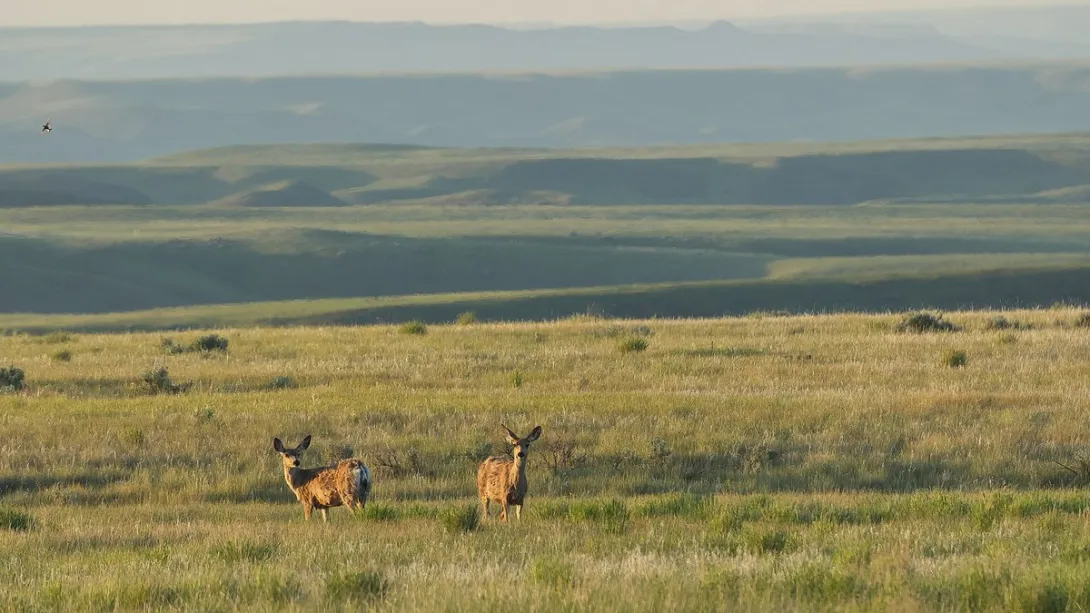
Mule deer are the large mammal visitors and residents are most likely to meet in Angel Fire, and November is one of the best times of year to watch for them. The deer here are Rocky Mountain mule deer, the subspecies the New Mexico Department of Game and Fish identifies in the northern half of the state. They are named for their large, mule-like ears, and bucks carry antlers that fork as they branch, unlike the single main beam of a white-tailed deer. In the Moreno Valley they move quietly between the open valley floor, sagebrush flats, and the edges of ponderosa pine and aspen forest, often in small groups at first and last light.
Click to see more photos of mule deer
Early November is a season of transition. Deer that spent the summer around higher conifer forest edges, aspen groves, and mountain meadows shift toward lower ground as cold deepens, spending more time in pinon-juniper woodland and on warmer, sunlit slopes. Food changes with them. Mule deer are browsers, and as green grasses and forbs fade they turn to the leaves, twigs, and buds of woody plants. Winter browse such as sagebrush, bitterbrush, and mountain mahogany becomes increasingly important, and deer conserve energy by feeding deliberately and resting in sheltered cover during the coldest parts of the day.
The reason deer are suddenly more visible is the approach of the rut. According to New Mexico State University guidance on mule deer in New Mexico, the breeding season in the northern part of the state begins in late November and continues into winter. In the weeks before it peaks, mature bucks leave their bachelor groups and begin covering more ground in search of does, moving more often in daylight and paying less attention to their surroundings than usual. Does and this year's fawns, born in early summer, stay in family groups, and a wandering buck is most often found not far from them.
That extra movement is a pleasure for wildlife watchers and a warning for drivers. Deer are most active around dawn and dusk, they travel in groups, and a rutting buck may cross a road with little hesitation. On NM-434 through the valley, NM-38 over Bobcat Pass, and US-64 through Cimarron Canyon, slow down at low light, scan the shoulders and meadow edges, and remember that if one deer crosses, others are likely to follow. If a deer steps into your path, brake firmly and stay in your lane rather than swerving, which can cause a more serious crash.
Know before you go
Watch mule deer from a respectful distance, from roads, trails, lakeshores, and established viewpoints, and give rutting bucks extra space. Never feed wildlife. Feeding changes natural behavior, draws deer toward roads and homes, and can harm animals whose digestive systems are adapted to natural winter browse. Stay on roads and trails, do not approach or follow deer for a closer photograph, and keep dogs under control. Sensitive exact locations for wildlife are intentionally not shared in this article. The best viewing is patient and quiet: arrive at dawn or dusk, use binoculars, and let the deer come and go on their own terms.