When Roy and George LeBus laid out their new resort in the Moreno Valley in the mid-1960s, they planned for more than ski trails. Alongside the first chairlifts, Monte Verde Lake, and a nine-hole golf course, they created a dirt airstrip on the ranch land north of the village. It was a practical idea for a remote cattle valley that was becoming a resort town: visitors who could fly in would not have to make the long mountain drive first. Federal records date the airport activation to September 1966, the same season Angel Fire Resort was born.
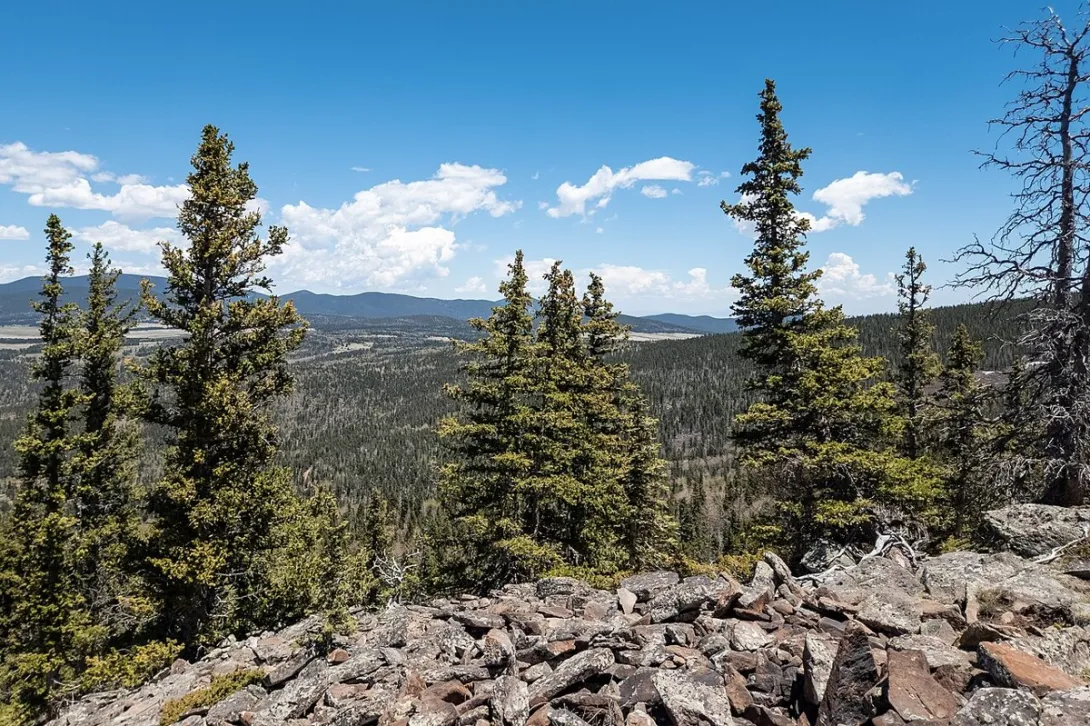
The first strip was modest by any standard. It was a single dirt runway about 6,700 feet long, set in the open valley floor with peaks of 11,000 to 13,000 feet rising on the east and west. At a field elevation of about 8,380 feet, it was already one of the highest airports in the country, and the long runway was no luxury. Thin mountain air means an airplane needs more ground roll to take off and land, especially on a warm summer day, so length was safety.
The strip grew up with the town. It was paved in the early 1970s, as the first condominiums were being completed and the resort was passing to new owners. In the latter 1980s it was lengthened to 8,900 feet, the length it still has today at 100 feet wide and designated 17/35. That growth brought a brief taste of airline service: during the winter ski season of 1986-1987, Mesa Airlines provided one flight a day to Albuquerque on a Beech 1900C, a 19-seat aircraft well suited to a short mountain hop.
Then the scheduled flights stopped, and for decades Angel Fire Airport settled into life as a county-owned, public-use general aviation field covering 220 acres. Private and corporate aircraft, which the paved and lengthened runway can accommodate as small jets, became its regular traffic. The ranch valley to resort town story seemed complete, except for that missing airline link, and generations of visitors kept arriving the old way, by road over Palo Flechado Pass and around the Enchanted Circle.
After 38 years, scheduled service returned for the winter of 2024-2025. A 1.4 million dollar Rural Air Service Enhancement grant from the New Mexico Department of Transportation helped launch Advanced Air service between Albuquerque International Sunport and Angel Fire, starting December 19, 2024, with flights five days a week in that first season. The Village of Angel Fire, Colfax County, and Angel Fire Resort partnered on the effort, and service was planned to continue on a seasonal basis for the summer and winter months.
Today the airport sits just north of the village as a quiet monument to how completely the valley changed in one lifetime. A place that once shipped cattle and welcomed miners by wagon and stage now welcomes skiers and summer visitors by air, at the highest airport in New Mexico and one of the highest in the nation. The dirt strip the LeBus family carved out of pasture did its job: it helped turn a working ranch valley into a resort town that the rest of the world could reach.