
Elizabethtown had already lived several lives by the autumn of 1903. Born in the gold rush of 1866 on the west slope of Baldy Mountain, it became New Mexico's first incorporated town and, in 1870, the first seat of newly formed Colfax County. When the easy gold gave out, its population fell from thousands to about one hundred by 1872, and the county seat moved to Cimarron. Yet E-Town, as its residents called it, hung on and revived somewhat when the railroad passed nearby, making mining feasible once again. On a dry Tuesday afternoon, September 1, 1903, that stubborn little town met the hour that finally broke it.
Click to see more photos of Elizabethtown — its main street, hotels, and ruins over the years »
The fire began at about 2:15 in the afternoon in the entertainment hall on the second floor of the Remsberg store, possibly from a defective flue, the Raton Range reported two days later. In the dry mountain air, the mostly wooden buildings caught fast. Within thirty minutes the big two-story store on the corner of the main business street was destroyed, along with nearly everything in it. Store manager H. B. Phelps and clerk William Walker, at considerable risk to their lives, got the company's books and money out of the safe, and willing hands salvaged a few hundred dollars' worth of dry goods.
From the Remsberg store the flames spread to the adjoining Mutz Hotel, then to Harry Brainard's place and another general store, while across the street the Moreno Hotel caught fire from flying embers. In one hour and fifteen minutes from the time the fire was discovered, every one of those buildings had been reduced to ashes. When the smoke cleared, the Raton Range could report exactly one mercantile establishment left standing in town: the store of Herman Froelick. One business survived the afternoon; the rest of commercial Elizabethtown was gone.
The Mutz Hotel was rebuilt in stone, and its ruins are still among the most striking sights at the town site today. But Elizabethtown itself never truly recovered from those seventy-five minutes. The mines were already fading, and as the years passed the remaining residents drifted away; by 1917 few people still called the town home, though its post office, established in 1868, held on until 1931. A gold town that had once rivaled any place in New Mexico for size had become a quiet cluster of ranch homes, stone walls, and memories.
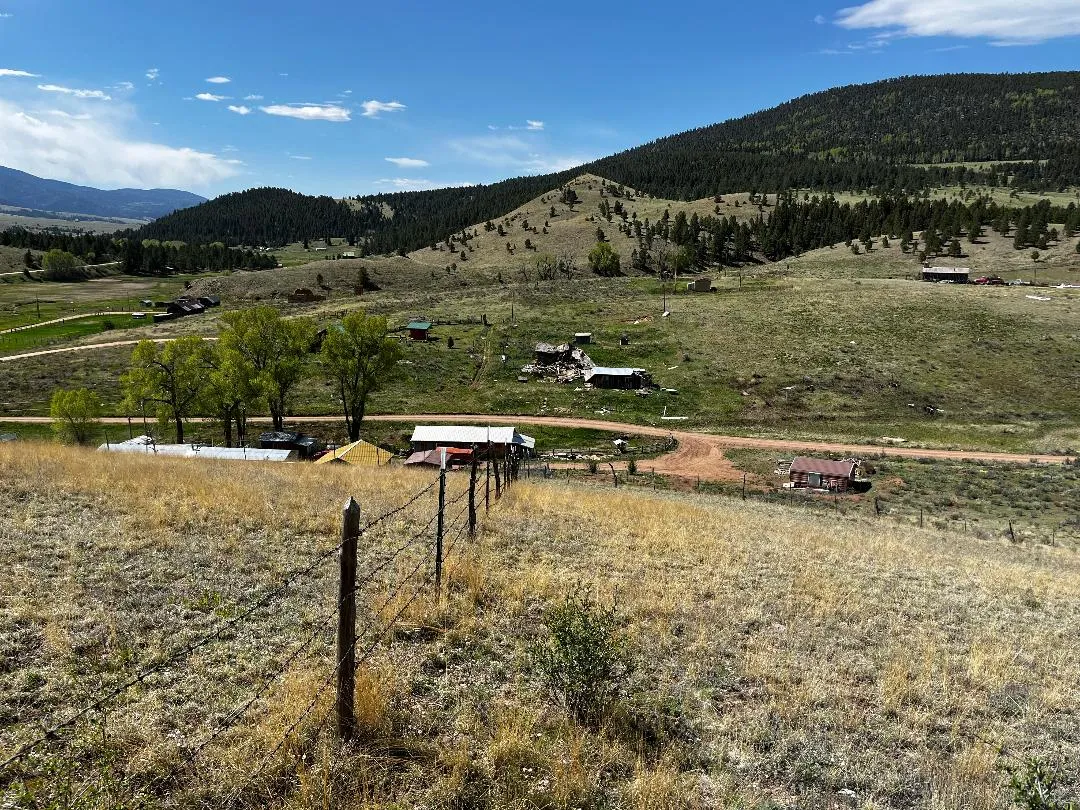
You can still stand in the hillside cemetery above New Mexico State Road 38, five miles north of Eagle Nest, and look south over what was once Elizabethtown, much as the photograph with this story does: scattered homes, the remains of the old hotel, and open valley grass where a main street once bustled with miners, merchants, and dance halls. Angel Fire and Eagle Nest owe their beginnings to the valley this town opened up. The fire took the buildings in a single afternoon, but it could not take the story — and every traveler who slows down on the drive through the Moreno Valley passes right through it.