Every ranch, mine, and ski run in the Angel Fire country sits on ground once controlled by a single land grant — and, for a time, by a single man. The story of the Maxwell Land Grant shaped the Moreno Valley as surely as its mountains did.
The grant began in 1841, when Governor Manuel Armijo awarded a vast tract in northeastern New Mexico to Carlos Beaubien and Guadalupe Miranda. Beaubien's son-in-law, a former mountain man named Lucien B. Maxwell, married into the family and set about consolidating the claim. By 1864, Maxwell had bought out the other heirs and owned the entire grant outright: 1,714,765 acres, the largest single landholding in United States history. It included Baldy Mountain, the gold camps of Elizabethtown, and the whole Moreno Valley at its western edge.
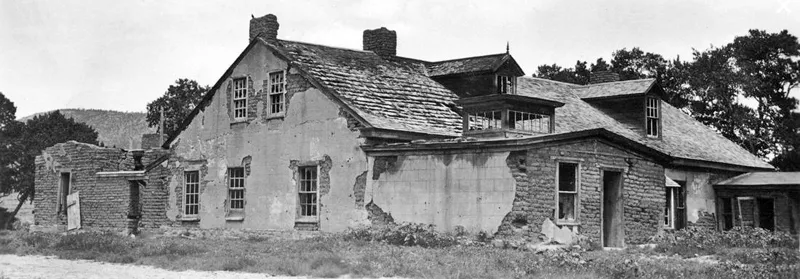
Maxwell ran his empire from a mansion in Cimarron, issuing provisions, settling disputes, and letting miners and settlers work the land with his blessing. Under Maxwell, a family could stake a claim or graze cattle in the Moreno Valley and feel secure.
That security vanished in 1870, when Maxwell sold the grant to European investors, who organized the Maxwell Land Grant Company. The company demanded rent and payment from people who had lived on the land for years, and its eviction attempts ignited the Colfax County War — a decade of lawsuits, shootings, and defiance across the grant. Settlers in the Moreno Valley found the company's Cimarron office burned and its agents resisted, and the fighting over who truly owned this country dragged on for years.
The legal question finally reached the United States Supreme Court, which in 1887 upheld the company's title. The old grant was gradually sold off in pieces — ranch by ranch, mine by mine. Among those later purchases from the Maxwell Land Grant Company were the very lands that became Angel Fire's first resort holdings, which is why the name of a 19th-century land baron still echoes beneath a 21st-century ski town.