Sunday, November 1, 2026
It is a quiet, rainy shoulder-season Sunday in Angel Fire, and the clocks fell back overnight as daylight saving time ended at 2:00 a.m. Sunrise came at 6:24 a.m. and sunset follows early at 5:04 p.m., giving the Moreno Valley just 10 hours and 40 minutes of daylight. With light rain at 41 degrees this morning, a high near 56, and showers and scattered thunderstorms expected into the evening, it is a good day for a slower question that visitors ask all year: how did a village in an old ranching valley come to be called Angel Fire?
The best-known story reaches back to the Moache Ute people, who spent part of the year in the Moreno Valley long before there was a ski area or a village here. In the telling passed down through New Mexico Magazine and local histories, Ute families gathered in the valley in autumn noticed a strange red and orange glow flickering on Agua Fria Peak. An elder called it the fire of the gods, a blessing on the gathering. Franciscan friars who later heard the story interpreted that glow through their own faith, as the fire of the angels, and the shorter name Angel Fire is what stayed.
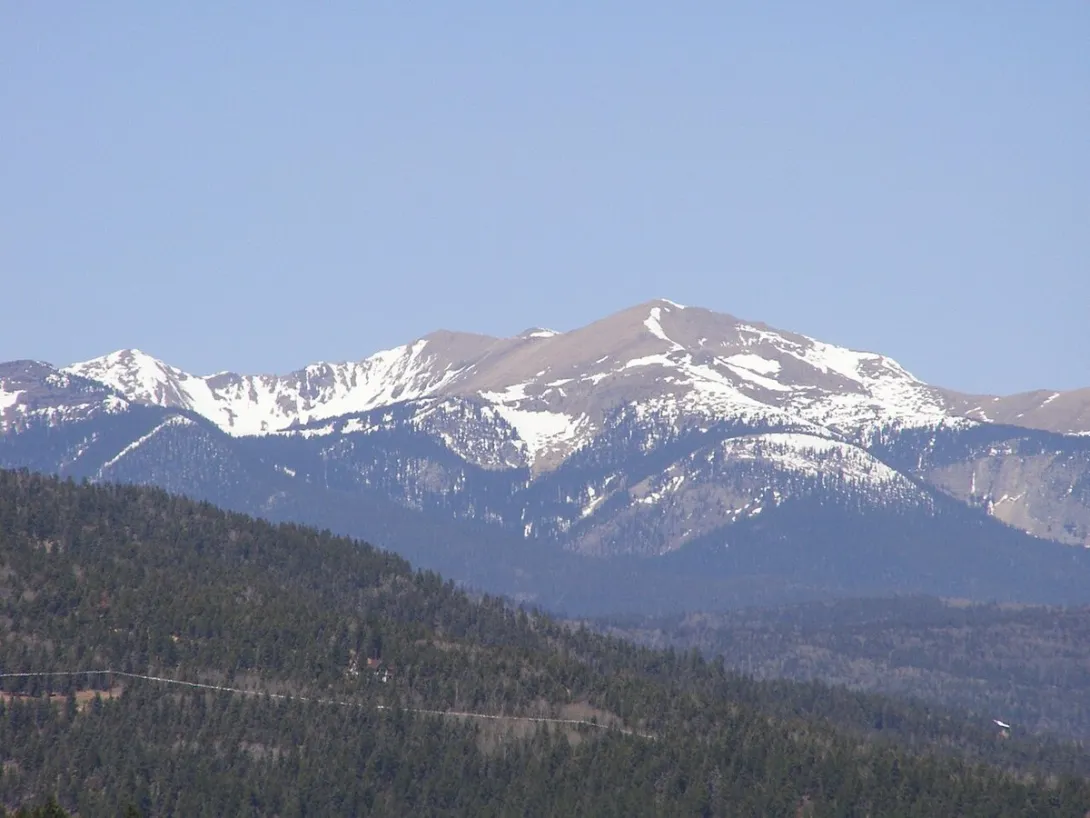
A second version, recorded by Robert Julyan in The Place Names of New Mexico, is more dramatic. Lightning, in that account, started a fire on the mountain that threatened a Ute camp. Just as the camp was about to flee, the wind shifted and a rainstorm put the fire out. The peak was called breath of spirits after that rescue, a name the Franciscans later rendered as breath of angels and, eventually, Angel Fire. There is also a simpler explanation anyone who has watched alpenglow here will recognize: at dawn and dusk the Sangre de Cristo peaks above the valley can light up red and gold as if they were burning. The honest answer is that the exact origin is unclear, and the versions have been handed down and reshaped for generations.
What is documented is how new the town is compared with its valley. The Moreno Valley is the ancestral land of the Moache Ute and Jicarilla Apache, later part of the Maxwell Land Grant country and then ranch country. The LeBus brothers bought the Cieneguilla Ranch here in 1954, and Angel Fire Resort began in 1966 on that ranch land. The Village of Angel Fire itself was not incorporated until July 1, 1986, which makes it one of New Mexico's youngest municipalities, home to 1,192 people in the 2020 census. The name, in other words, belonged to the mountain light long before it belonged to a resort or a village hall.
If the clouds break near sunset today, look east and south toward Agua Fria Peak and the high Sangre de Cristo rim and judge the legends for yourself. Monday turns colder, with morning rain and snow and a high near 41, so enjoy today's softer, slower valley while it lasts. Winter is coming into focus too: Angel Fire Resort opens its 60th anniversary season on December 11, 2026, with the new Angel Express, New Mexico's first high-speed six-passenger chairlift, and with night skiing paused for this winter while that new lift era settles in. Until then, these quiet November Sundays, an extra hour of sleep, and a name written in mountain light are Angel Fire at its most itself.