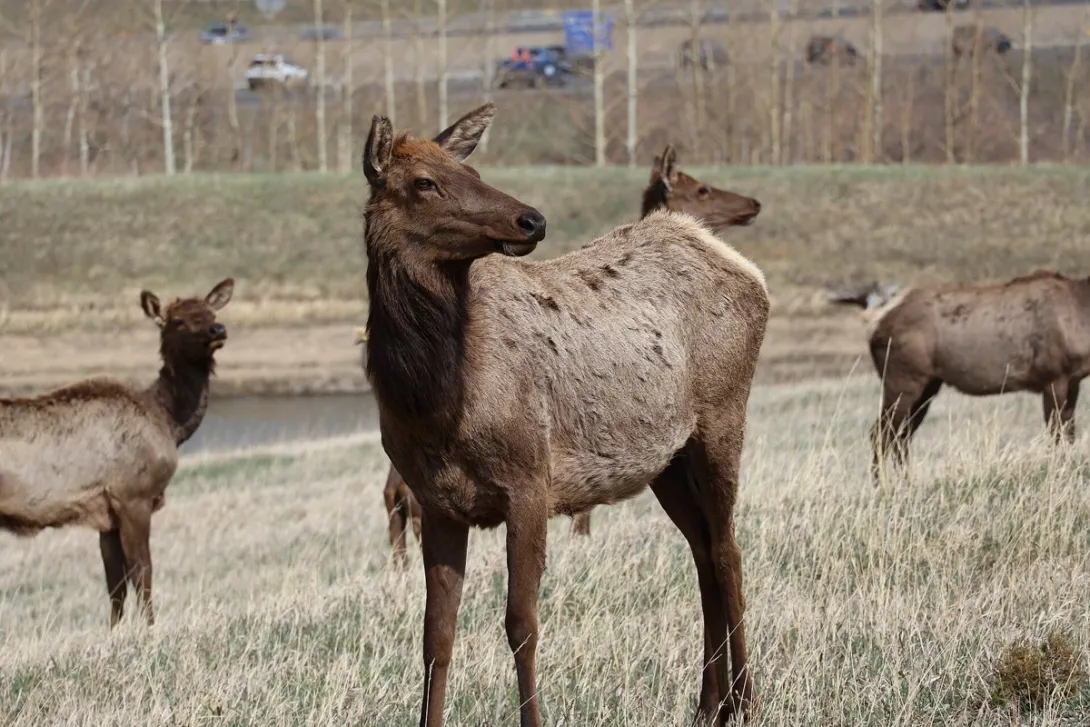
Early November is a quieter, gentler time to watch elk in the Moreno Valley. The bugling that echoed across the meadows around Angel Fire in late September and early October has faded, the rut is over, and herds are settling into the serious business of feeding and regaining strength before winter. On a still morning, you may find cows, calves, and young elk grazing in open meadows near the forest edge, heads down in the dry grasses, lifting now and then to scan the valley.
Click to see more photos of Rocky Mountain elk
That dawn-and-dusk rhythm is the best clue for watchers. Elk feed mostly in the morning and evening and seek sheltered areas during the middle of the day, so the first light over the valley floor and the last hour before sunset are the hours to be out looking, binoculars in hand. Open grasslands and meadow edges are where elk are most often found, grazing on grasses and other plants, and a herd at a distance, watched patiently, will often go right on feeding as if you were not there at all.
November is also a turning point in the high country. In mountain regions, elk generally stay in higher elevations during warmer months and move toward lower elevations in winter, following forage as snow covers the high ground and makes feeding harder. Around Angel Fire, that means herds shift gradually around the valley as the season turns, growing thicker winter coats along the way. Bulls, worn out from the rut, keep a lower profile this month, often apart from the main cow and calf herds while they recover.
Watching well here is mostly about patience and place. Look from roads, established viewpoints, and the edges of open ground rather than walking toward a herd, and give elk room to move between feeding areas and timber without being pushed. Be especially alert when driving NM-434, NM-38, and US-64 at dawn and dusk, when elk and deer are most active near the roadways. A slow drive and a long look from the shoulder, where it is safe to pull fully off the road, beat a close approach every time.
Know before you go
Watch elk ethically: keep your distance — at least 25 yards from elk and other large animals, and much farther if an animal changes its behavior, stops feeding, or moves away — and use binoculars, a spotting scope, or a telephoto lens instead of approaching. Never feed wildlife; feeding damages their health, alters natural behavior, and draws animals toward roads and people. Stay on roads, trails, and established viewpoints, and do not follow herds. Sensitive exact locations are intentionally not shared, to protect the animals. If an elk looks at you and alters what it is doing, you are too close — back off slowly and quietly.