Elizabethtown, the Moreno Valley's great gold boomtown, started with a mistake. In October 1866, a party sent out from Fort Union was working a copper prospect on Baldy Mountain when they panned the gravels of Willow Creek — and found gold instead.
The soldiers tried to keep the discovery quiet, but word of gold never stays secret for long. Prospectors poured into the valley, and a raw new town rose along Willow Creek at the head of the Moreno Valley, a few miles up present-day Highway 38 from Eagle Nest. They named it Elizabethtown, and it grew faster than anyone could have imagined.
Within three years, E-Town had become the first incorporated town in New Mexico, and by 1869 it may well have been the largest place in the territory, with thousands of miners, merchants, saloon keepers, and families crowding its wooden streets. Stamp mills pounded ore from the mines on Baldy Mountain, stagecoaches rolled in from the plains, and the Moreno Valley — quiet ranch and hunting country for centuries — suddenly had a city in it.
The boom could not last. The richest placers played out, water for mining was scarce and expensive, and miners drifted away to newer strikes. The town shrank decade by decade. Then, in 1903, fire swept through the wooden buildings and took most of what remained. By 1917 only a handful of residents were left in a town that had once rivaled any in New Mexico.
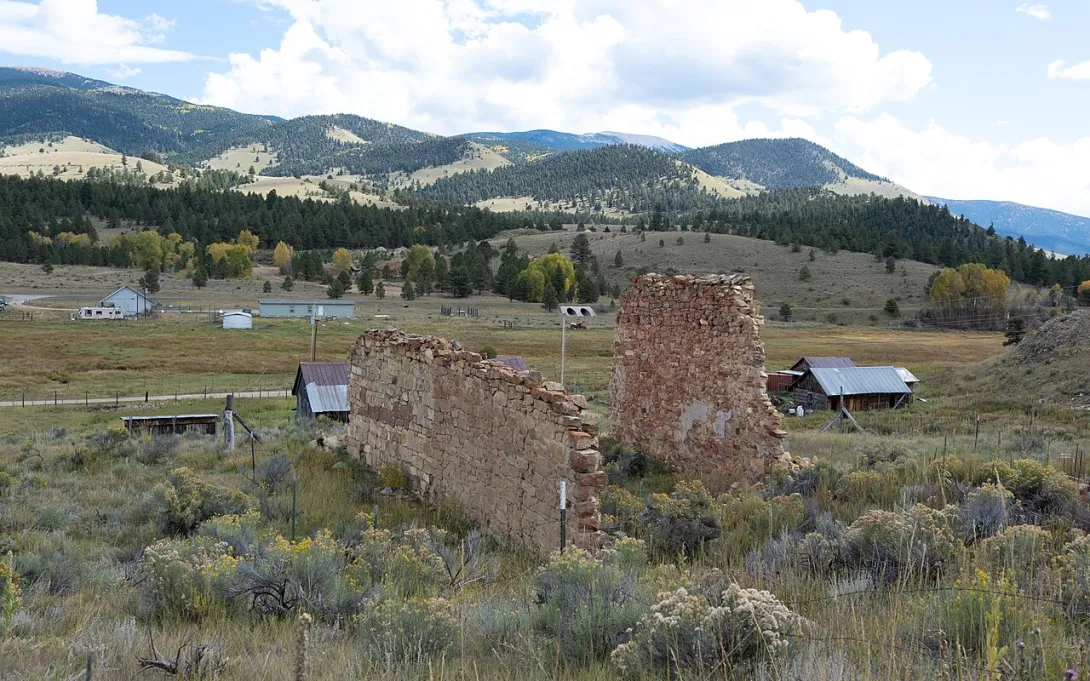
Today Elizabethtown is one of the valley's most evocative places. A hillside cemetery holds the graves of the boom years, and a lone stone wall — all that is left of a boarding house — stands beside the highway. Drivers on NM 38 pass in seconds, but it is worth slowing down: this quiet field was once the biggest town in New Mexico, born because some soldiers found the wrong metal in a creek.